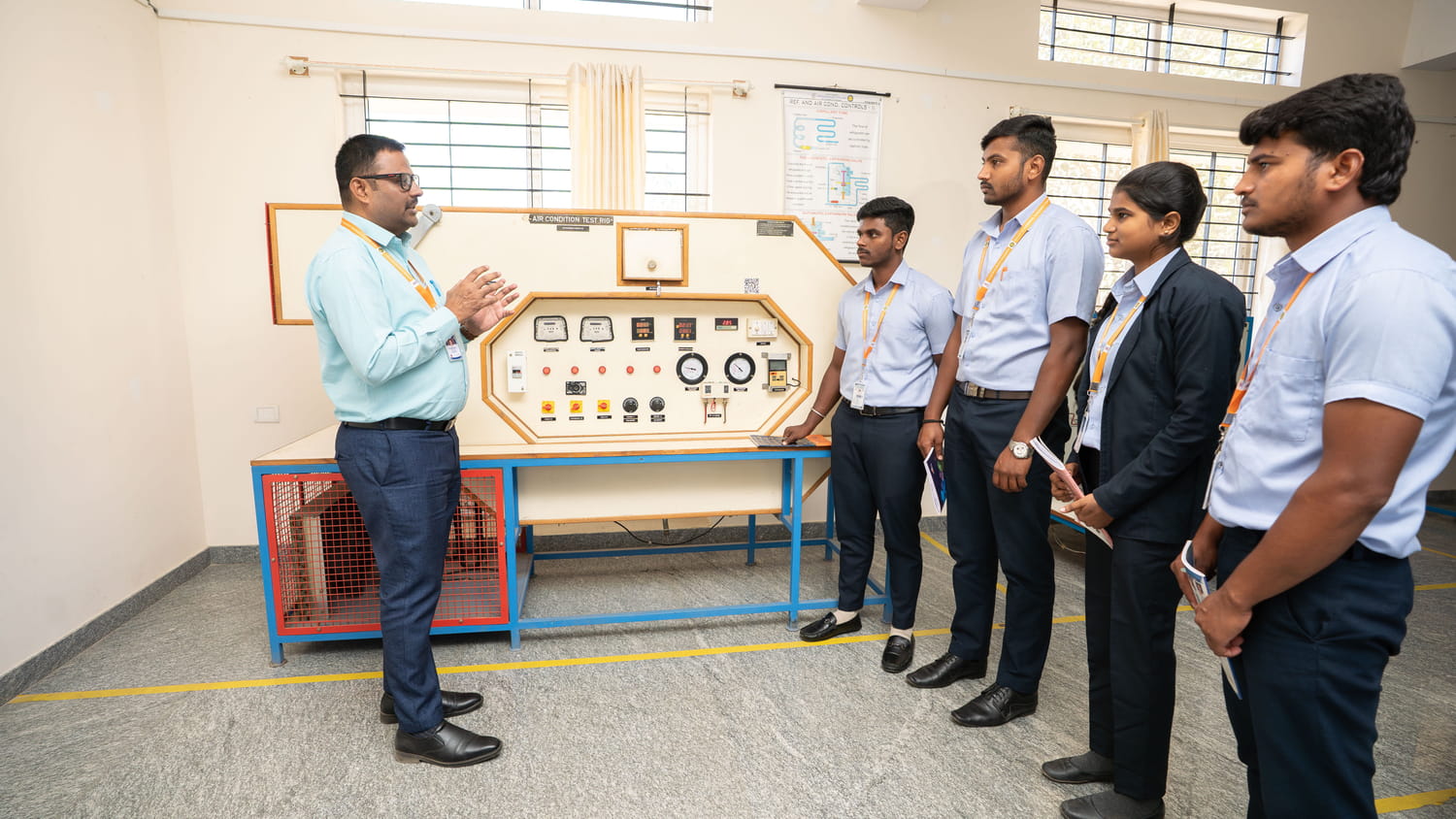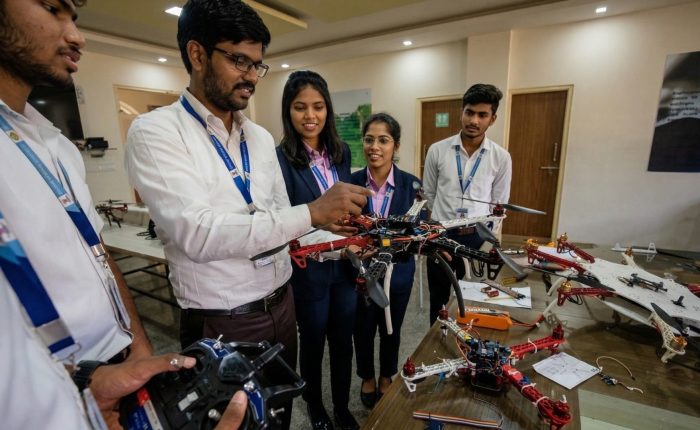
The research enterprise at BGSIT is grounded in the conviction that meaningful technological progress emerges from the intersection of empirical investigation, sustained scholarly inquiry, and purposeful collaboration with industry and society. Faculty and doctoral scholars across all departments engage in funded research paradigms that span fundamental science, applied engineering, and translational innovation.
BGSIT's research enterprise encompasses 15+ patents filed across multiple domains with 7 granted, over 990 journal publications, and an expanding portfolio of interdisciplinary projects addressing domains from wireless sensor networks to medical diagnostics and artificial intelligence. The establishment of the AICTE IDEA Lab, the CAAP partnership with the Central Manufacturing Technology Institute (CMTI), and active participation in national programmes such as Unnat Bharat Abhiyan and Smart India Hackathon underscore the institution's commitment to a vibrant innovation ecosystem.
Distributed sensing architectures, energy-efficient communication protocols, and IoT applications for environmental monitoring, smart agriculture, and industrial automation. Patented innovations and indexed journal publications anchor this domain.
Interdisciplinary research at the nexus of engineering and healthcare — AI-driven diagnostic imaging, biosensor development, and health data analytics. Collaborative projects within the ACU medical ecosystem facilitate translational outcomes.
Scholarly inquiry across deep learning, NLP, computer vision, and reinforcement learning. Funded projects address predictive analytics for agriculture, intelligent transport, and automated medical diagnosis — outputs in international conferences and journals.
Empirical investigation in advanced concrete technology, seismic-resistant design, geotechnical modelling, and sustainable construction materials. Outcomes inform academic discourse and consultancy with industry partners.
Advanced research in digital and analog VLSI architectures, FPGA-based system design, System-on-Chip development, and embedded real-time systems. Closely aligned with the M.Tech programme in VLSI Design & Embedded Systems.
Investigations into solar energy harvesting, energy storage, green building technologies, and sustainable manufacturing. Faculty-driven projects align with national clean-energy priorities and Unnat Bharat Abhiyan participation.
Research at BGSIT is not merely an academic exercise — it is a purposeful endeavour to address real-world challenges through rigorous inquiry, technological innovation, and interdisciplinary collaboration.Dr. B.N. Shobha · Dean & Principal, BGSIT
BGSIT's intellectual property portfolio includes 15+ patents filed across Computer Science, Electronics & Communication, Mechanical, and Civil Engineering — with 7 granted in areas spanning performance analysis methods, dental caries detection, ECG content-based retrieval, Al-B-Graphite composites, nano metal matrix materials, rainfall analysis, and vehicle monitoring systems. These filings represent the culmination of sustained empirical investigation by faculty and doctoral scholars, translating laboratory findings into protectable innovations with potential for commercial and societal impact.
The institution's publication record encompasses over 990 papers in peer-reviewed international journals, indexed in Scopus, Web of Science, and IEEE Xplore. An additional 36 publications from the Management Studies department bring the institutional total to over 1,030. Faculty members regularly present their findings at national and international conferences, enriching scholarly discourse across multiple engineering and management disciplines.
Funded research has been supported through grants from the Karnataka State Council for Science and Technology (KSCST) under the Student Project Initiative (STI) scheme, AICTE's Modernisation and Removal of Obsolescence (MODROB) grant, and ACU institutional seed money — with 8 faculty projects receiving Rs 10.31 lakhs in the 2025 seed funding cycle alone.
Doctoral research in structural engineering, geotechnical modelling, transportation systems, environmental engineering, and sustainable construction materials. Scholars undertake rigorous empirical investigation under faculty with established publication records and industry consulting experience.
Advanced scholarly inquiry in thermal sciences, manufacturing technology, materials characterisation, computational fluid dynamics, and renewable energy systems. The programme leverages the CAAP partnership with CMTI to facilitate industry-oriented doctoral research.
Doctoral research spanning artificial intelligence, machine learning, data science, cybersecurity, cloud computing, and software engineering. Scholars benefit from the AI & Data Science Lab and access to IEEE ASPP, ProQuest, and NDLI digital resources.
Focused doctoral investigation in VLSI design, embedded systems, signal processing, wireless communication, and satellite technologies. The Satellite Ground Station and VLSI & Embedded Systems Lab provide specialised infrastructure for cutting-edge research.