

Six specialised M.Sc. degrees at Adichunchanagiri School of Natural Sciences — built on a Choice-Based Credit System, anchored in original research, and designed to prepare scientists for careers in academia, industry, and doctoral research.
ASNS offers 6 M.Sc. programs under CBCS (Choice-Based Credit System). All programs are 2-year, 4-semester degrees with a minimum 80 credits. The curriculum includes Hard Core (HC), Soft Core (SC), Open Elective (OE) courses, Seminars, and a mandatory Project Work in the final semester.
Every M.Sc. student undertakes original research culminating in a dissertation evaluated by internal and external examiners. Students work alongside faculty researchers with access to advanced laboratories, instrumentation facilities, and dedicated research centres on campus.
The blend of structured coursework and independent investigation equips graduates for doctoral study, R&D roles in industry, teaching, and specialist careers across the natural sciences.
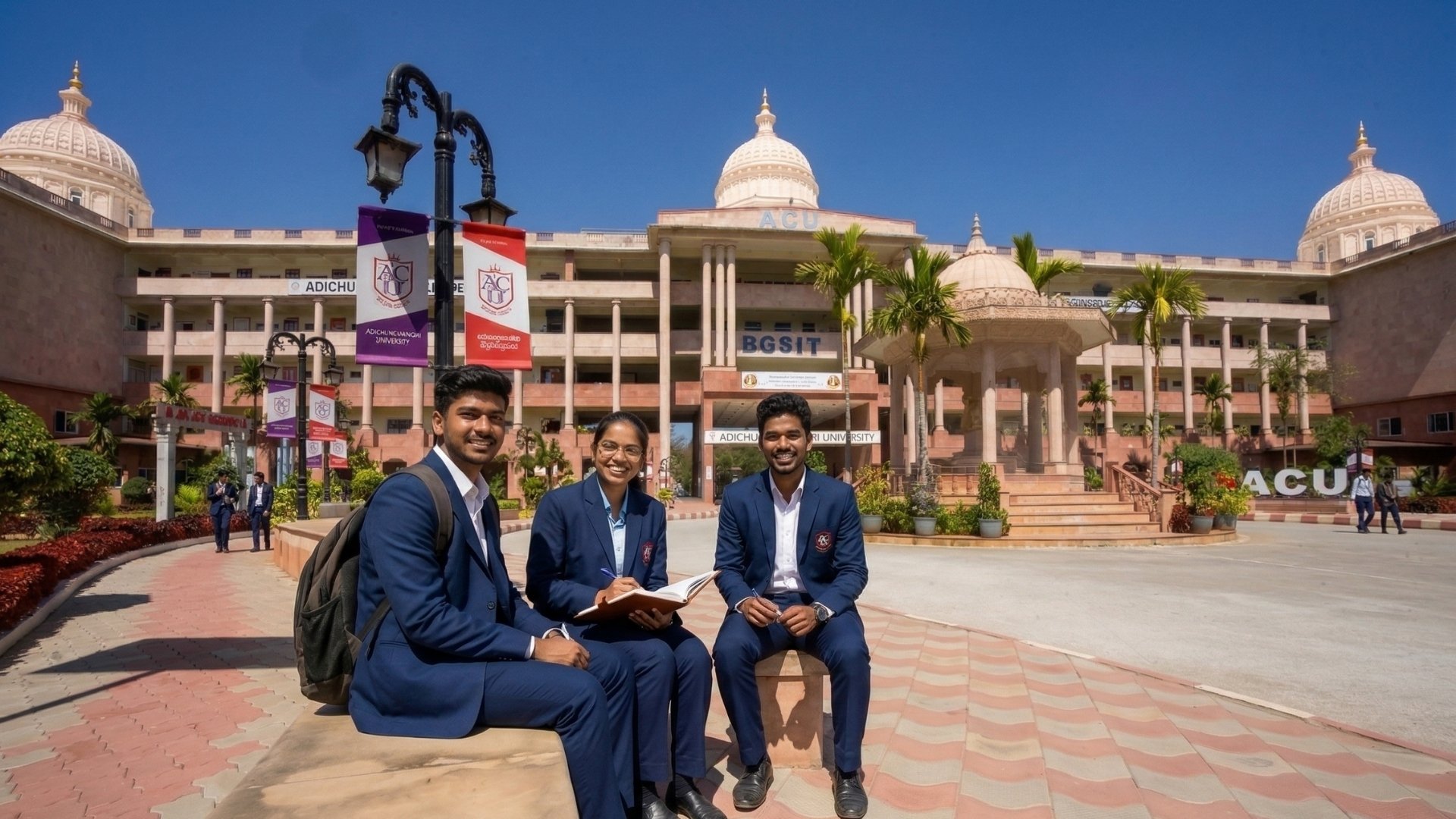
Each specialisation is anchored by a dedicated department, experienced faculty, and research-grade laboratories. Select the field that matches your undergraduate cognate and research interest.
Applied physics, materials science, instrumentation, nanoscience, and computational physics.
Organic, inorganic, physical and analytical chemistry; nanotechnology, materials science, and green chemistry.
Enzymology, metabolism, clinical biochemistry, and biomolecular research.
Molecular biology, genetic engineering, bioinformatics, and industrial biotechnology.
Medical, industrial, and environmental microbiology with strong clinical research linkages.
Algorithms, software engineering, data science, and computational methods.
Structured under CBCS with clearly defined credit requirements, evaluation norms, and a mandatory research dissertation in the final semester.
2 years across 4 semesters; maximum 4 years to complete; each semester is 20 weeks of instruction.
Minimum 80 credits. Theory: 1 credit = 16 hours; Laboratory: 1 credit = 32 hours of contact time.
Hard Core, Soft Core, Open Elective, Seminars, and a mandatory Project Work component.
Theory: CIE 40 + SEE 60. Practical: CIE 20 + SEE 30. Continuous internal + end semester exam.
Grade E (≥45%) in each course; CGPA ≥5.0 for degree award; attendance ≥75% mandatory.
Individual project; plagiarism must be <25%; evaluated via internal report and external viva voce.
ASNS follows a 10-point absolute grading system aligned with UGC CBCS guidelines. CGPA is computed across all credited courses.
| Grade | Level | Points | Percentage |
|---|---|---|---|
| O | Outstanding | 10 | ≥ 90 |
| A | Excellent | 9 | 80 – 89 |
| B | Very Good | 8 | 70 – 79 |
| C | Good | 7 | 60 – 69 |
| D | Above Average | 6 | 50 – 59 |
| E | Average | 5 | 45 – 49 |
| F | Fail | 0 | < 45 |
P = (CGPA − 0.5) × 10In addition to the specific cognate requirements for each M.Sc. specialisation, the following general eligibility rules apply to all applicants.
M.Sc. students at ASNS tap into a mature research ecosystem — from dedicated centres and funded projects to an active publication pipeline across all six specialisations.
An M.Sc. from ASNS opens pathways into research, industry, academia, and doctoral programs at leading institutions in India and abroad.