

A two-year, four-semester postgraduate programme at the Adichunchanagiri School of Natural Sciences built around the four classical branches of chemistry and ASNS’ research focus areas.
The M.Sc. Chemistry programme at ASNS offers rigorous coursework across organic, inorganic, physical and analytical chemistry, delivered under the Choice-Based Credit System with 80 total credits over four semesters.
Research orientation sits at the heart of the curriculum. Students engage with nanotechnology, materials science and green chemistry — the three thematic pillars of the ASNS Chemistry Department — through advanced electives, laboratory work, and a dedicated dissertation in the final semester.
Graduates leave prepared for doctoral study, R&D careers in the pharmaceutical and chemical industries, quality assurance roles, and teaching positions in higher education.
Core Pillars

Coursework progresses from foundational core papers in Semester 1 toward specialised electives and an independent dissertation by Semester 4.
Summarised from the ACU M.Sc. Regulations (2025-27). For detailed norms, refer to the full regulations document.
Minimum 80 credits across 4 semesters. Normal duration is 2 years, with a maximum of 4 years to complete the programme.
Theory: CIE 40% + SEE 60%. Practical: CIE 20 + SEE 30. Project Work evaluated for 180 marks (60 report + 120 viva).
Letter grades O, A, B, C, D, E, F on a 10-point scale; passing requires GP ≥ 5, 40% in SEE, 50% in CIE and 45% in aggregate.
Conversion formula used by ACU: P = (CGPA − 0.5) × 10. Example: a CGPA of 8.2 converts to 77%.
Advanced instrumentation, dedicated research centres, and committed faculty mentorship anchor the M.Sc. Chemistry experience at ASNS.
Hands-on training on UV-Vis, FT-IR, HPLC, GC, and other analytical instruments integral to modern chemistry research.
Independent dissertation work in Semester 4, supervised by faculty researchers and evaluated by internal and external examiners.
Dedicated coursework in Semester 3 covers NMR, mass spectrometry, and electronic/vibrational spectroscopy techniques.
Elective coursework in sustainable synthesis, eco-friendly catalysis, and environmentally benign solvents.
One-to-one academic advising through assigned Faculty Advisors and dissertation guides throughout the programme.
Access to central research infrastructure including ACU-CRI, AIMM, CORMIL, and CMPAT for advanced collaborative research.
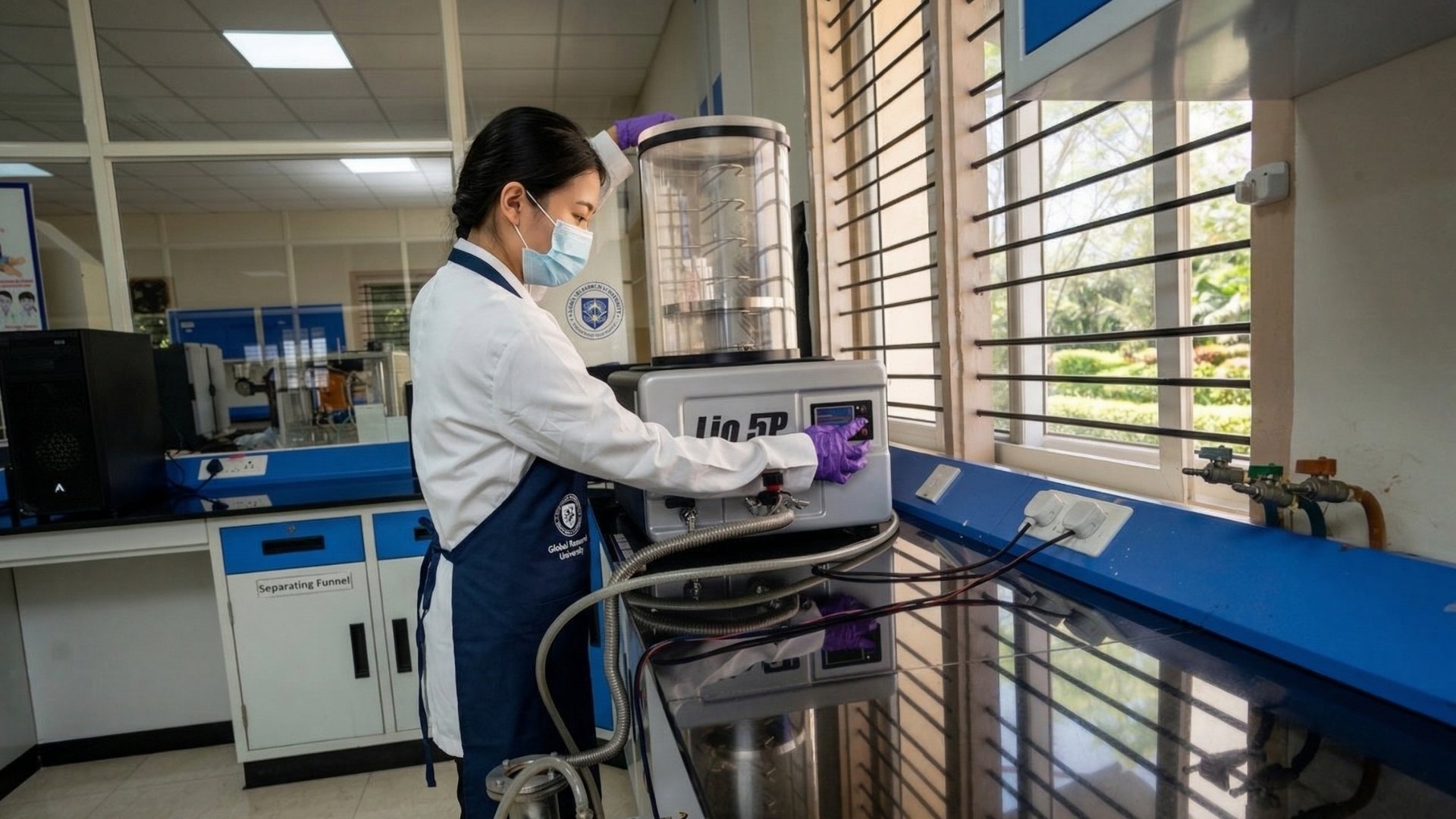
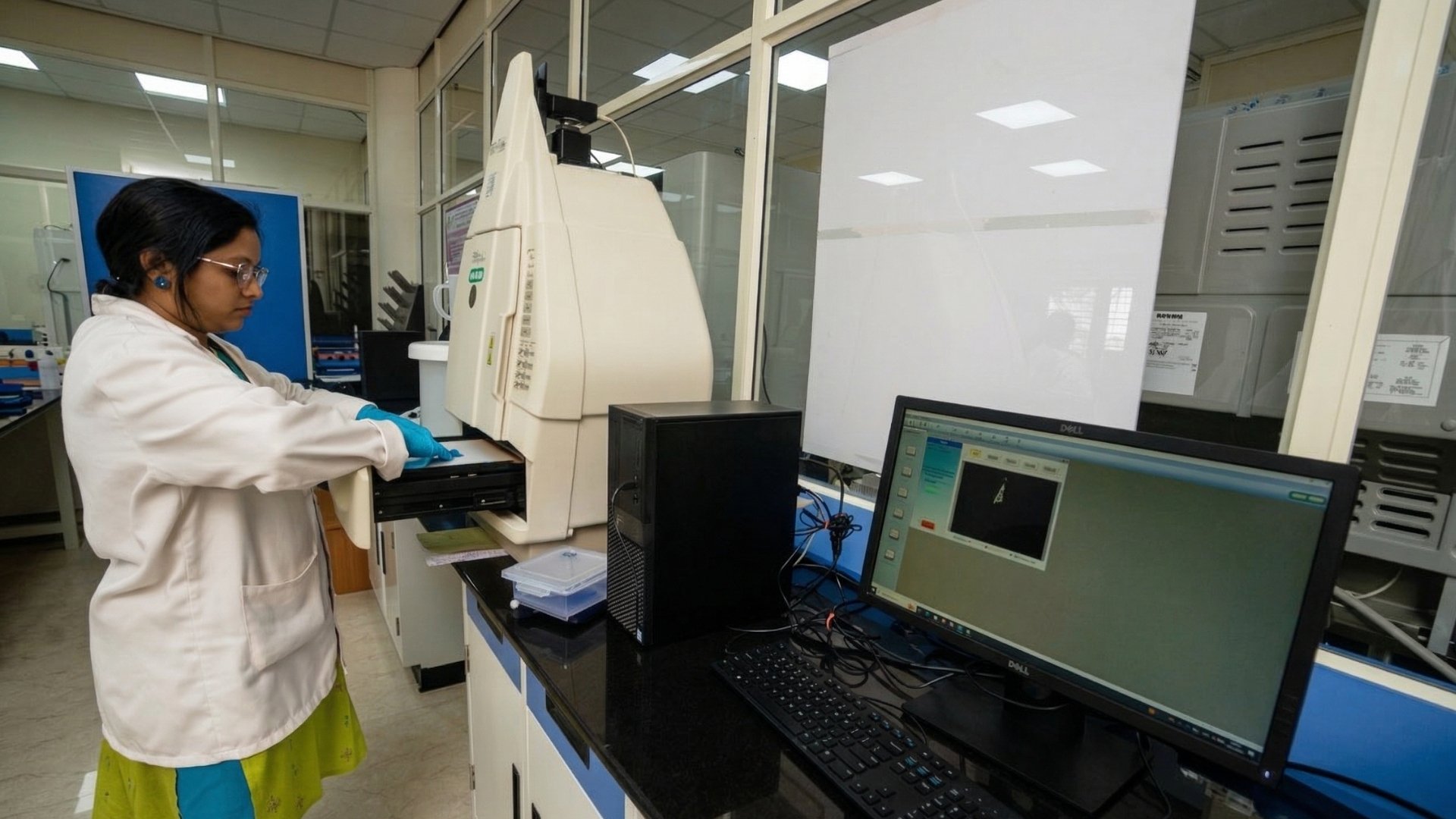



M.Sc. Chemistry alumni build careers across research, industry, academia, and regulatory sectors.
Candidates must meet ACU’s postgraduate eligibility norms for M.Sc. Chemistry and clear the prescribed entrance process.
B.Sc. / B.E. / B.Pharm / MBBS or equivalent with a minimum of 40% aggregate and 45% in the cognate. Chemistry cognate: candidate must have completed a UG course in Chemistry or Biochemistry. SC/ST candidates are entitled to relaxation as per government notifications.
Join ASNS M.Sc. Chemistry and work alongside experienced faculty on research projects spanning nanotechnology, materials, and green chemistry — with access to advanced instrumentation and ACU central research centres.