

ASNS operates modern, discipline-specific laboratories equipped with advanced instrumentation to support undergraduate practicals, postgraduate research, and doctoral investigations. Each department maintains dedicated facilities tailored to its curriculum and research focus, while centralized resources enable interdisciplinary collaboration.
In addition to departmental labs, ASNS scholars have access to four centralized research centres — ACU-CRI, AIMM, CORMIL, and CMPAT — which house specialized equipment for cutting-edge research in molecular medicine, drug discovery, nanomedicine, and industry-linked applied research. This integrated infrastructure supports 280+ publications, 10 funded projects, and 4 patents originating from ASNS faculty and scholars.
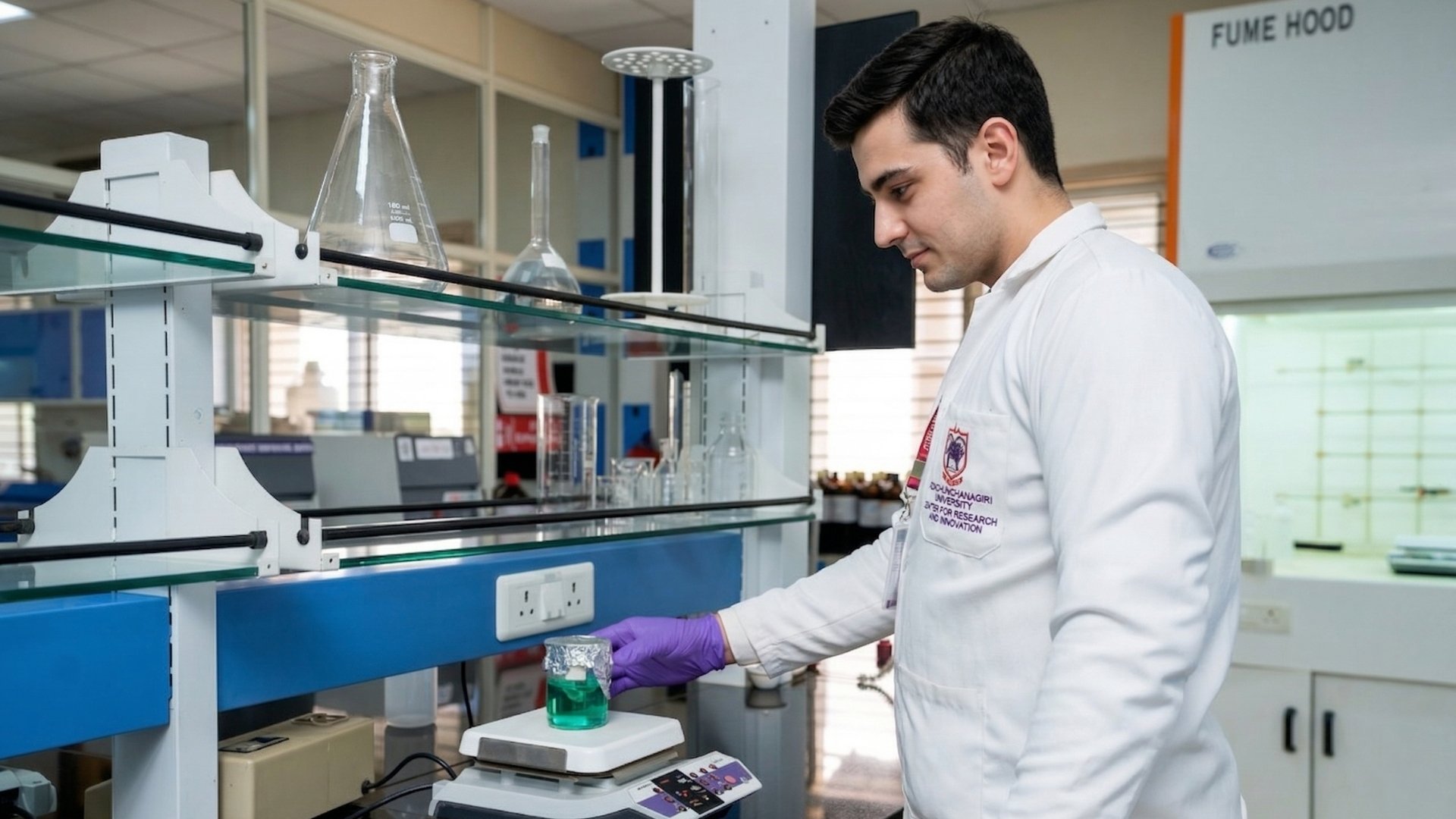
Centralized research centres at Adichunchanagiri University provide ASNS scholars access to specialized instrumentation and collaborative research environments spanning molecular medicine, drug discovery, and industry-linked applied sciences.
Multi-disciplinary research hub with shared instrumentation supporting interdisciplinary projects across ACU constituent units.
Dedicated to molecular medicine, gene expression studies, and translational research bridging basic science and clinical application.
Facilitates industry collaboration and applied research, connecting ASNS expertise with real-world industrial and commercial needs.
Drug discovery, formulation development, and nanomedicine research with specialized equipment for advanced therapeutic studies.
Each academic department maintains dedicated teaching and research laboratories aligned with its curriculum and specialization areas.
Covers optics, electronics, thermal physics, nuclear physics, and computational physics setups for undergraduate practicals and research investigations.
Supports organic, inorganic, physical, and analytical chemistry coursework along with synthesis and characterization research.
Enzymology, metabolism, and clinical biochemistry practicals alongside research into biomolecular mechanisms.
Molecular biology, genetic engineering, bioinformatics, and industrial biotechnology teaching and research activities.
Medical, industrial, and environmental microbiology with facilities for culture, staining, and microbial characterization.
Programming, data structures, software engineering, data science, and computational research across science disciplines.
A snapshot of typical advanced instruments supporting research, characterization, and analytical work across ASNS departments and central research centres.
Drug analysis, compound separation, and quantitative determination of complex mixtures.
Quantitative analysis, kinetic studies, and concentration measurements across the UV-visible range.
Functional group identification and material characterization via infrared absorption.
DNA amplification supporting molecular biology, diagnostics, and genetic research.
Cell biology imaging, fluorophore detection, and subcellular localization studies.
Protein and nucleic acid separation for molecular biology and biochemistry research.
Immunological assays, antibody and antigen quantification for clinical and research use.
Long-term storage of sensitive biological samples, reagents, and cell lines.
Sample preparation, cell separation, and density-based fractionation workflows.
High-pressure steam sterilization of media, glassware, and lab equipment.
Sterile workspace for microbiology, tissue culture, and aseptic procedures.
Controlled-temperature microbial growth studies and biochemical oxygen demand testing.
Precise weight measurement essential for quantitative chemistry and biochemistry.
Gentle solvent removal and sample concentration in organic synthesis workflows.
Controlled heating and mixing for chemical reactions and sample preparation.
Solution preparation, buffer adjustment, and titration endpoint determination.
Imaging and archiving of electrophoresis gels for downstream molecular analysis.
All ASNS laboratories follow strict safety protocols, supported by trained personnel, documented procedures, and regular compliance audits.
Students, scholars, and faculty can access research equipment through their respective departments or by booking central research centre facilities. Ph.D. scholars and M.Sc. project students receive priority for dissertation work. Industry collaborators may access specialized instrumentation through CORMIL and CMPAT centres under formal collaborative arrangements.
Join ASNS and access modern laboratories, advanced instrumentation, and four dedicated research centres.